

In today’s digital world, getting your business noticed online can be challenging. Many businesses have good products and services, but reaching the right customers at the right time is not always easy. This is where Google Ads can help.
Google Ads allows businesses to display advertisements to people who are actively searching for products, services, or information related to their business. With the right strategy, even a small business can use Google Ads to increase website traffic, generate leads, and attract new customers.
In this blog, we will explore how to promote your business with Google Ads and some practical ways to make your campaigns more effective.
What Is Google Ads?
Google Ads is an online advertising platform from Google. Businesses can create advertisements that appear across Google Search and other Google properties.
For example, imagine you own a digital marketing agency. Someone searches for “digital marketing services near me.” With a properly targeted Google Ads campaign, your advertisement could appear when that person is looking for a service like yours.
This makes Google Ads different from many traditional forms of advertising because you can reach people based on what they are actively searching for.
Why Should You Use Google Ads for Your Business?
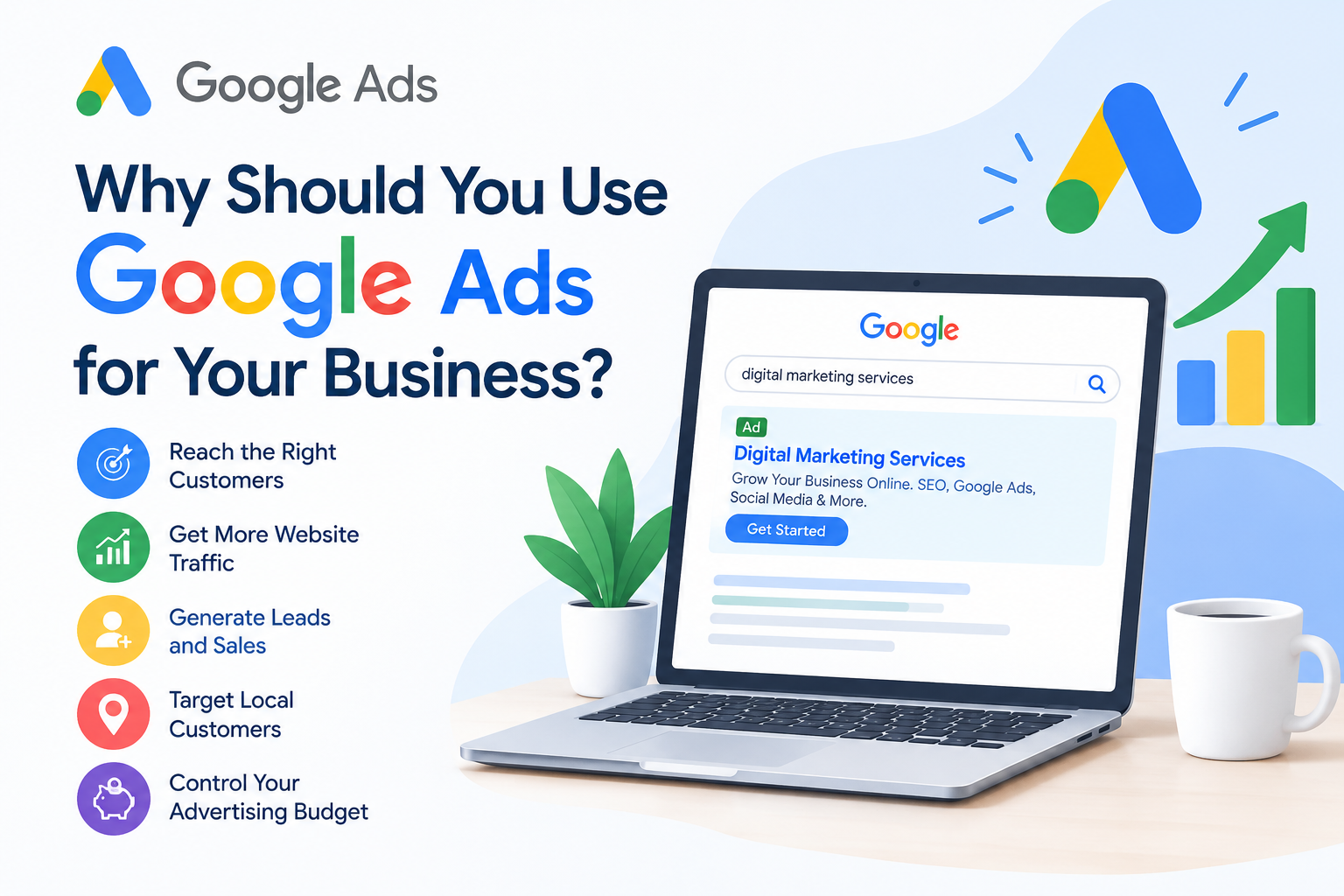
There are several reasons businesses use Google Ads as part of their marketing strategy.
1. Reach People Who Are Already Searching
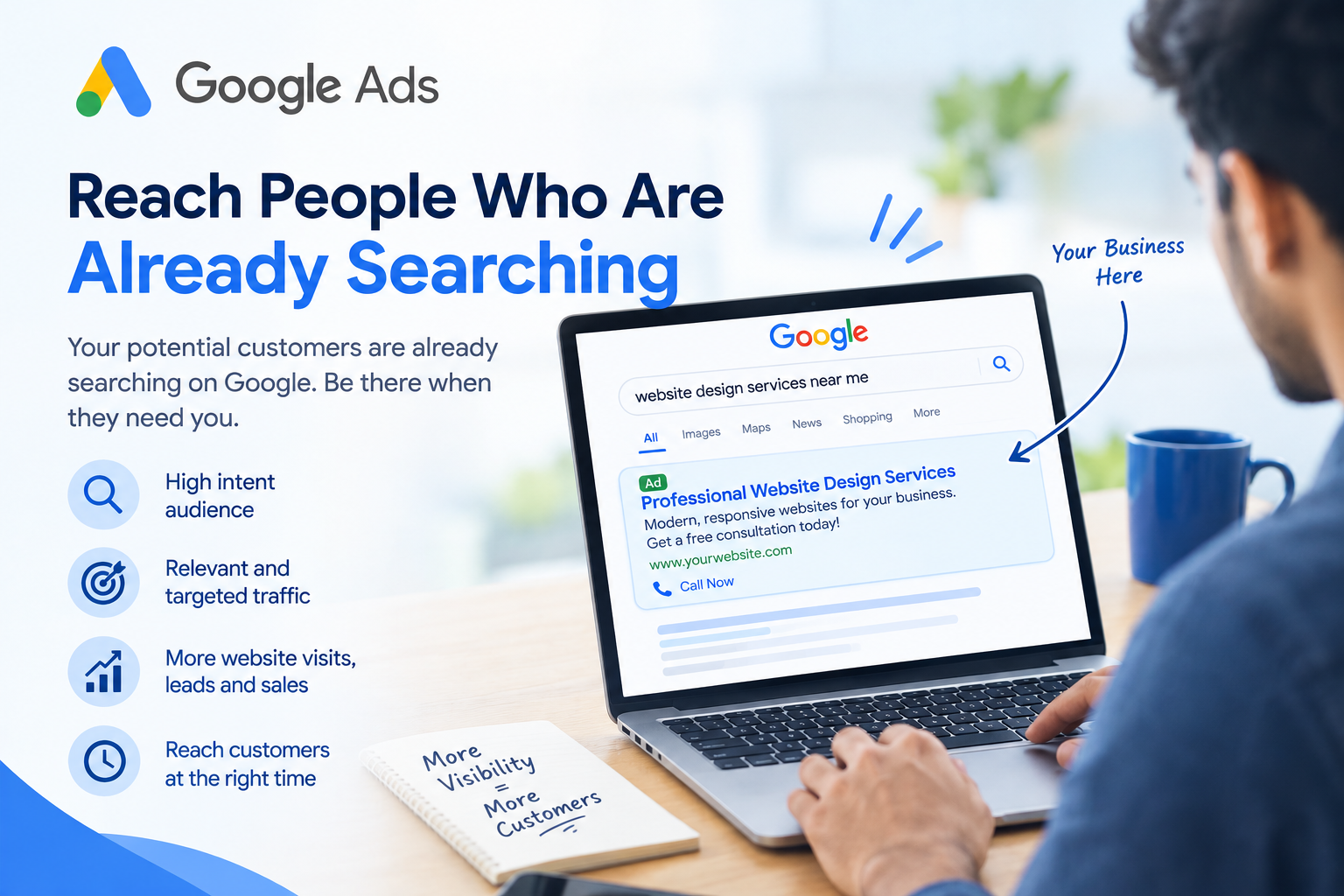
One of the biggest advantages of Google Ads is search intent. People who search for a specific product or service may already have an interest in buying.
For example:
- “Best website design company”
- “Digital marketing agency near me”
- “Online photography course”
- “Best bakery in Kottayam”
By targeting relevant searches, your business can appear in front of potential customers at an important stage of their buying journey.
2. Start With a Flexible Budget
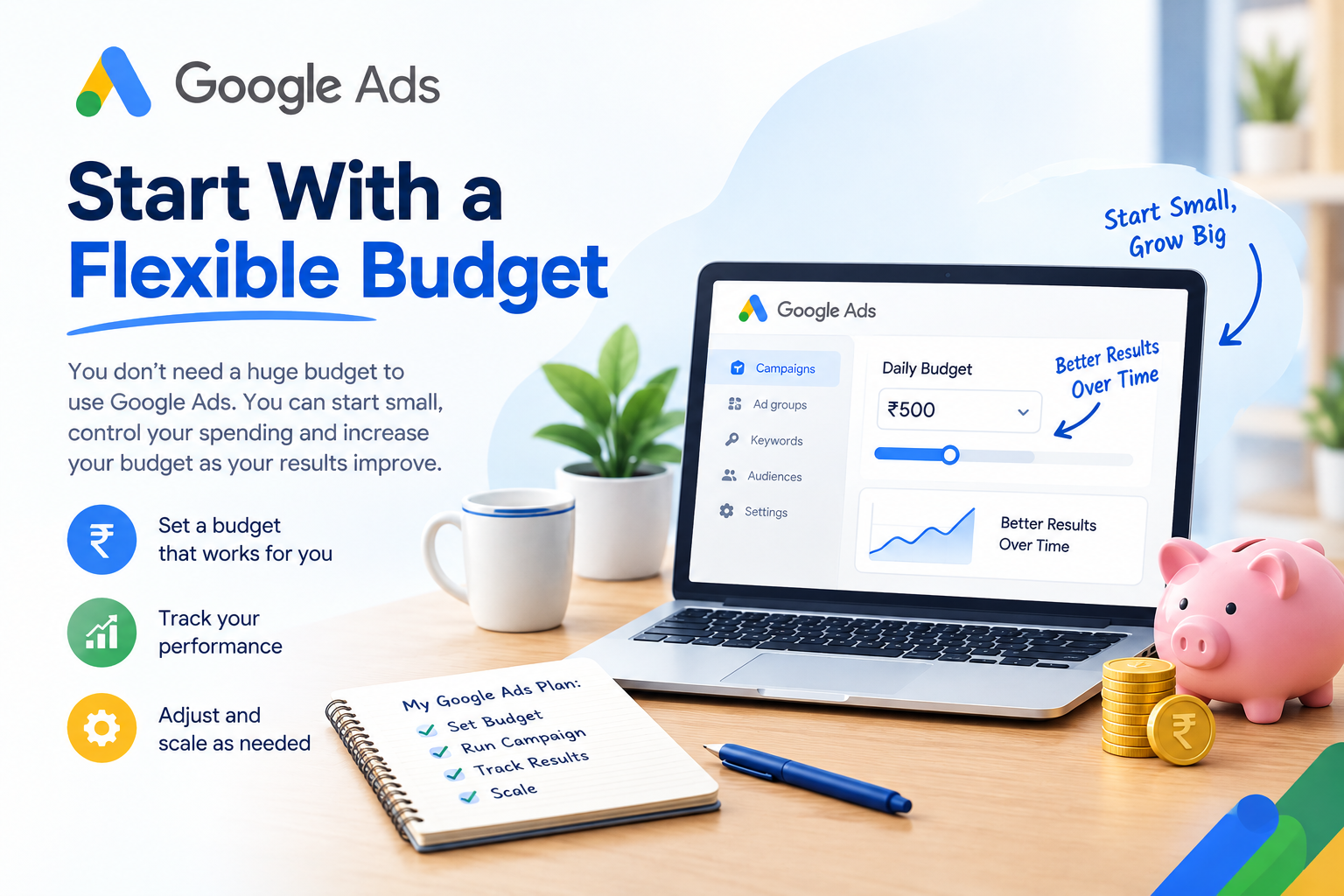
You don’t necessarily need a huge advertising budget to begin. Google Ads allows advertisers to control how much they are willing to spend.
You can start with a small daily budget, monitor the results, and make changes based on campaign performance.
The key is not simply spending more money. It is about using your budget carefully and targeting the right audience.
3. Generate More Website Traffic
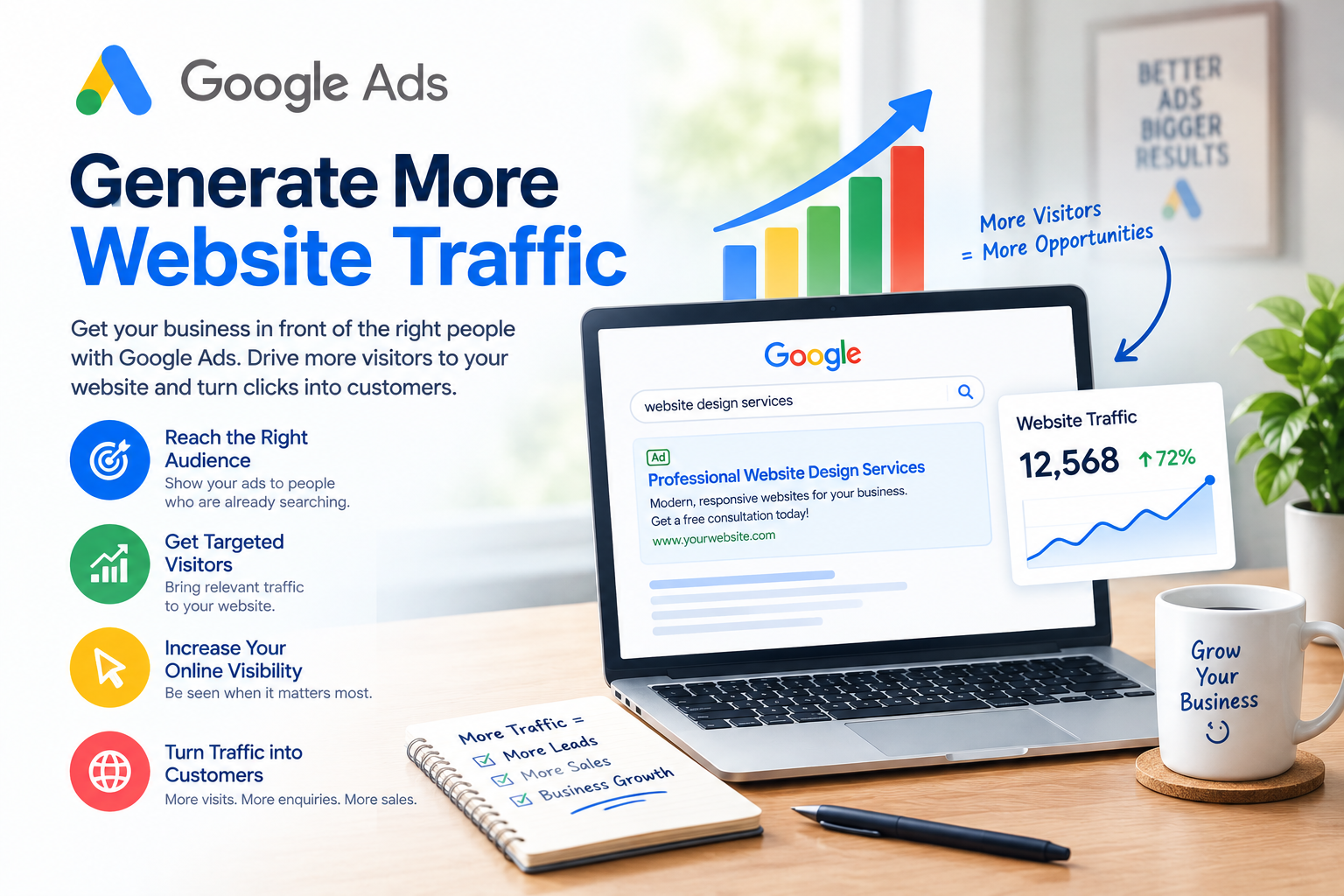
If your website is new or doesn’t receive enough visitors through organic search, Google Ads can help bring targeted traffic to your website.
Instead of waiting for your website to rank naturally, paid advertising can give your business an opportunity to appear prominently for relevant searches.
4. Generate Leads and Sales
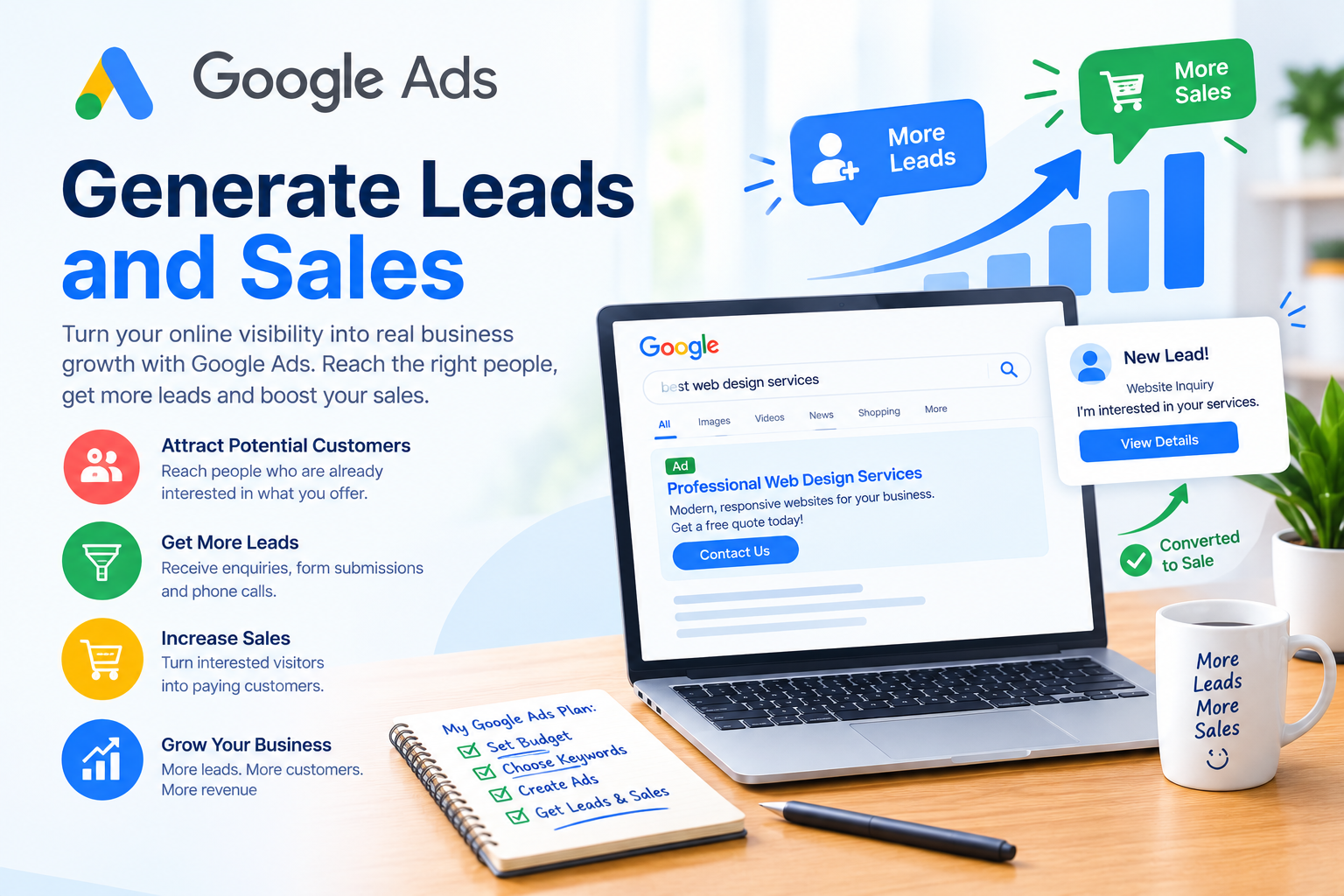
Google Ads can be used for more than increasing website visitors. A well-planned campaign can encourage people to take valuable actions such as:
- Calling your business
- Filling out a contact form
- Requesting a quotation
- Booking a service
- Purchasing a product
- Sending an enquiry
Your advertising goal should determine what action you want visitors to take after clicking your advertisement.
How to Promote Your Business With Google Ads

Now let’s look at some practical steps for creating a Google Ads strategy.
Step 1: Define Your Advertising Goal
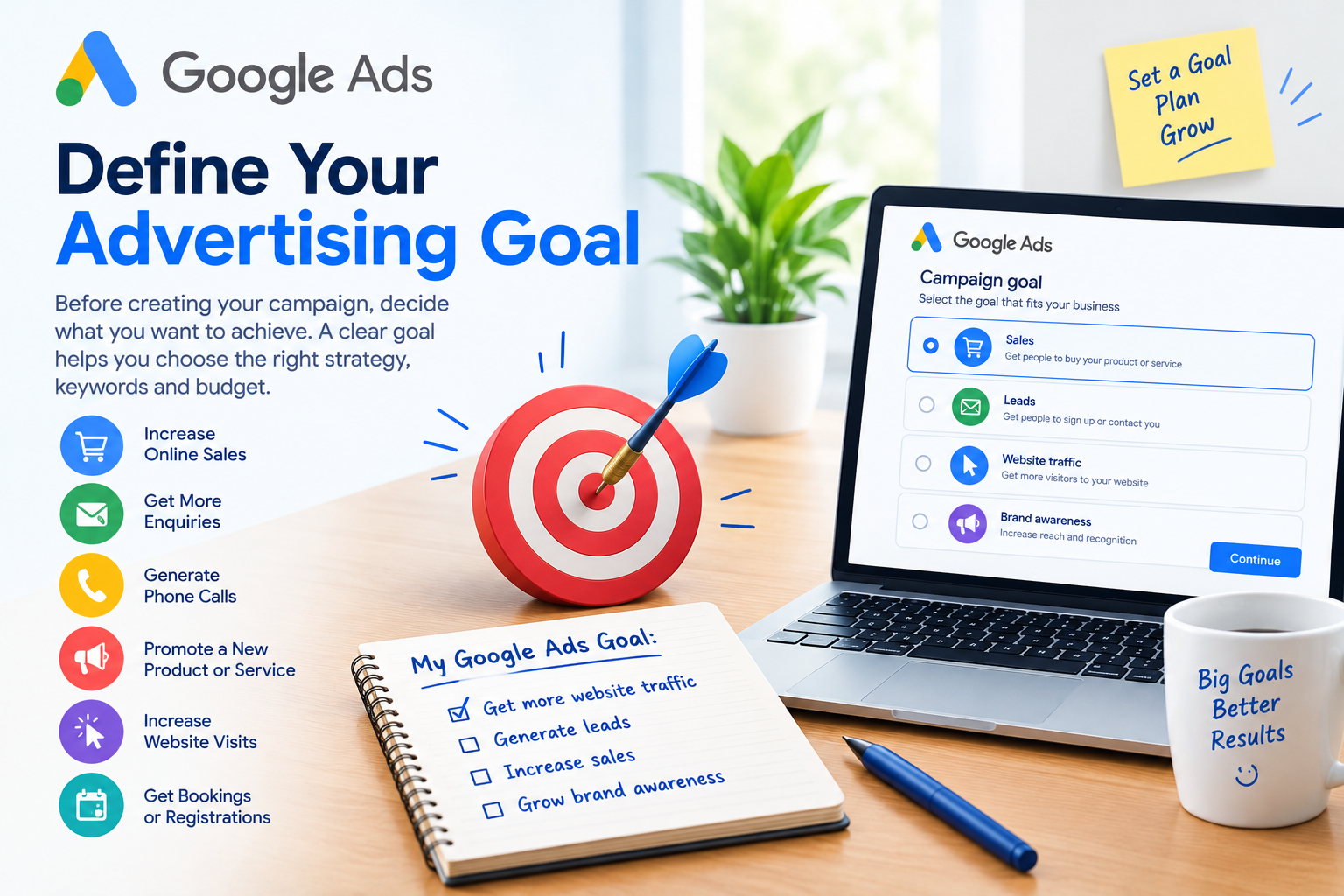
Before creating your campaign, decide what you want to achieve.
Your goal could be:
- Increasing online sales
- Getting more enquiries
- Generating phone calls
- Promoting a new product
- Increasing website visits
- Getting bookings or registrations
Having a clear goal makes it easier to choose the right campaign strategy and measure your results.
Step 2: Understand Your Target Audience
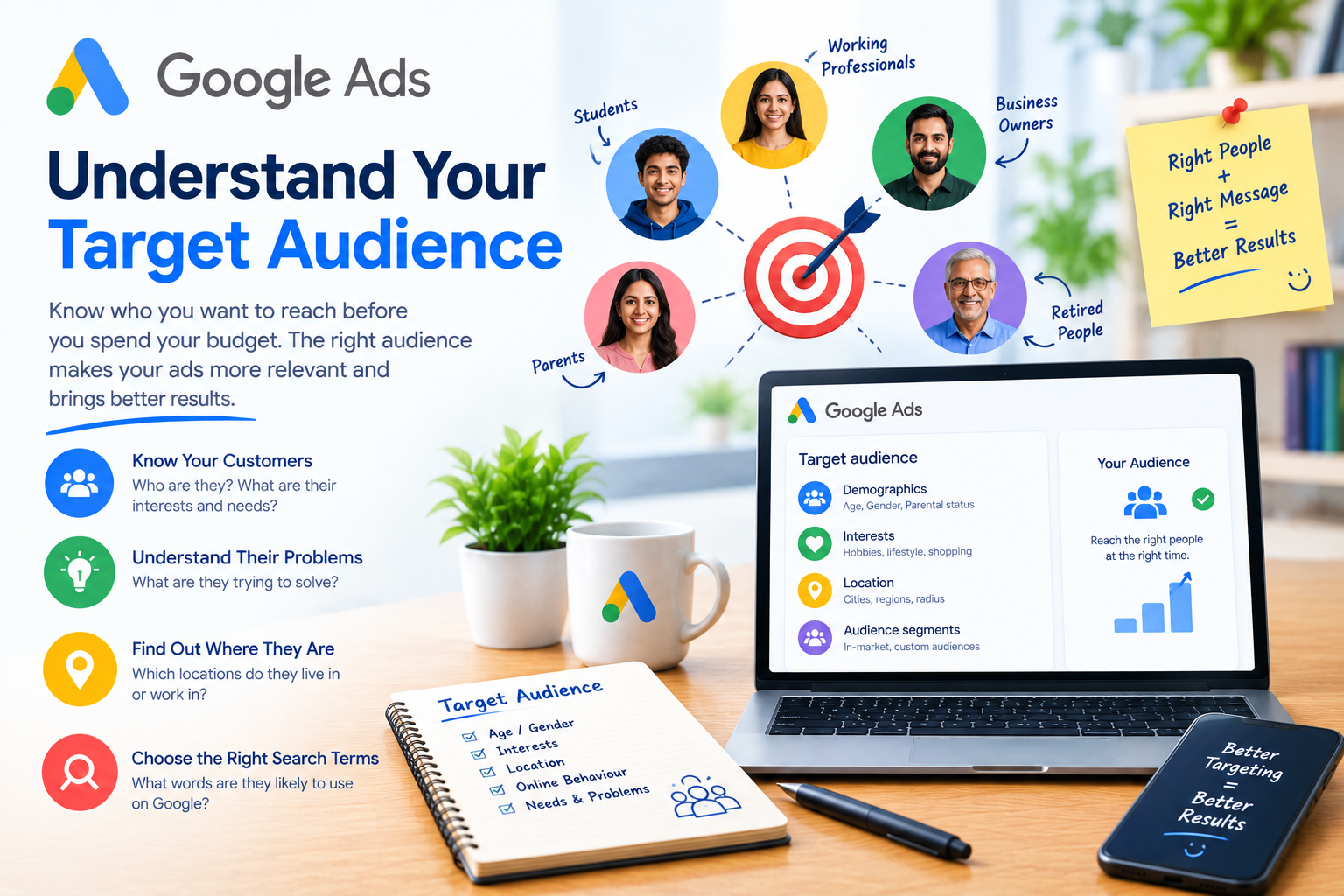
You should know who you want to reach before spending money on advertising.
Think about:
- Who are your customers?
- What problem are they trying to solve?
- What products or services are they looking for?
- Where are they located?
- What type of search terms might they use?
Understanding your audience helps you create advertisements that are more relevant to their needs.
Step 3: Choose the Right Keywords
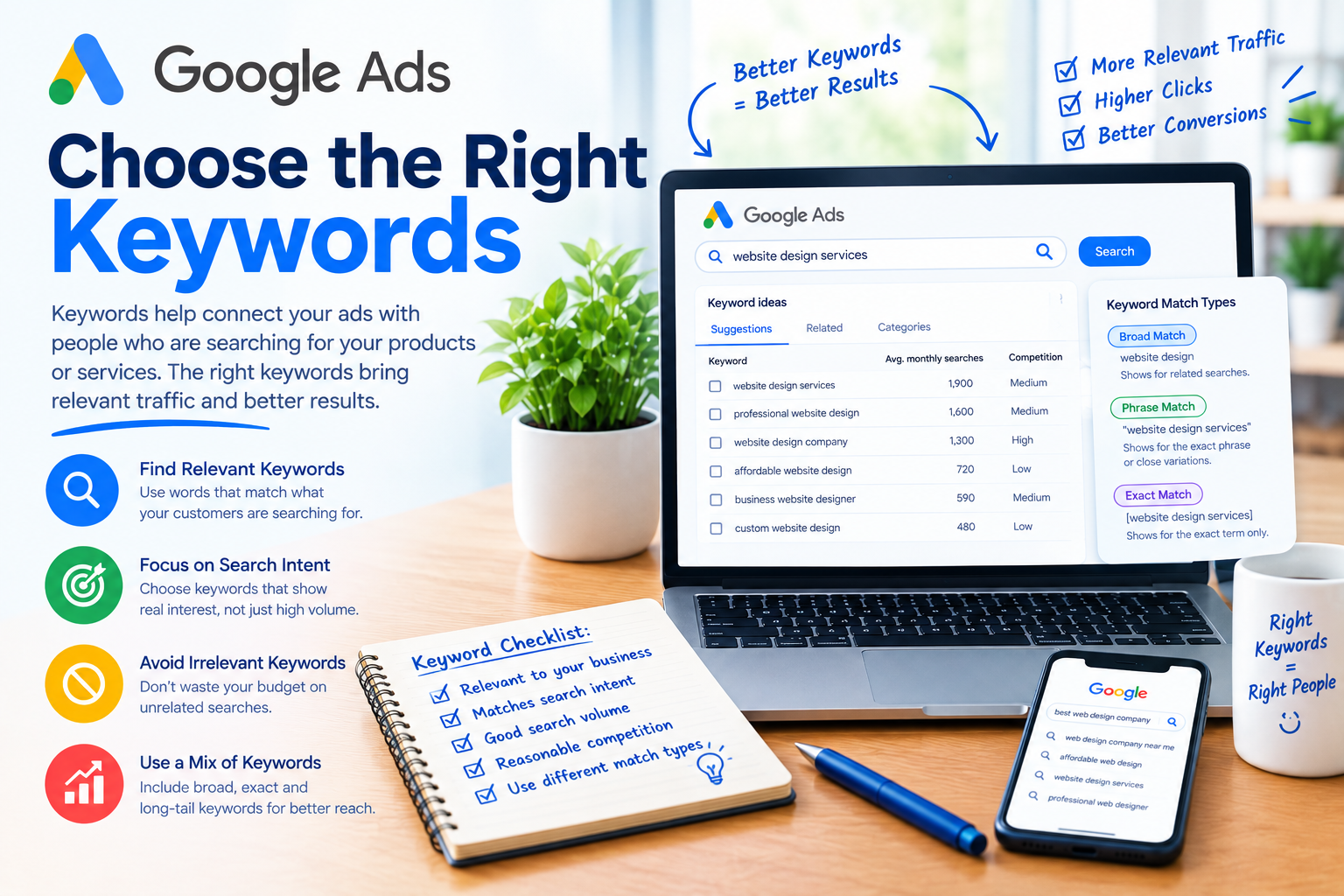
Keywords are an important part of search advertising. They help connect your advertisements with relevant searches.
For example, if you offer web design services, possible keywords could include:
- web design services
- website development company
- professional website design
- business website designer
Don’t choose keywords only because they receive a high number of searches. Relevance is extremely important.
A keyword that attracts thousands of unrelated visitors may waste your advertising budget.
Step 4: Write a Clear Advertisement
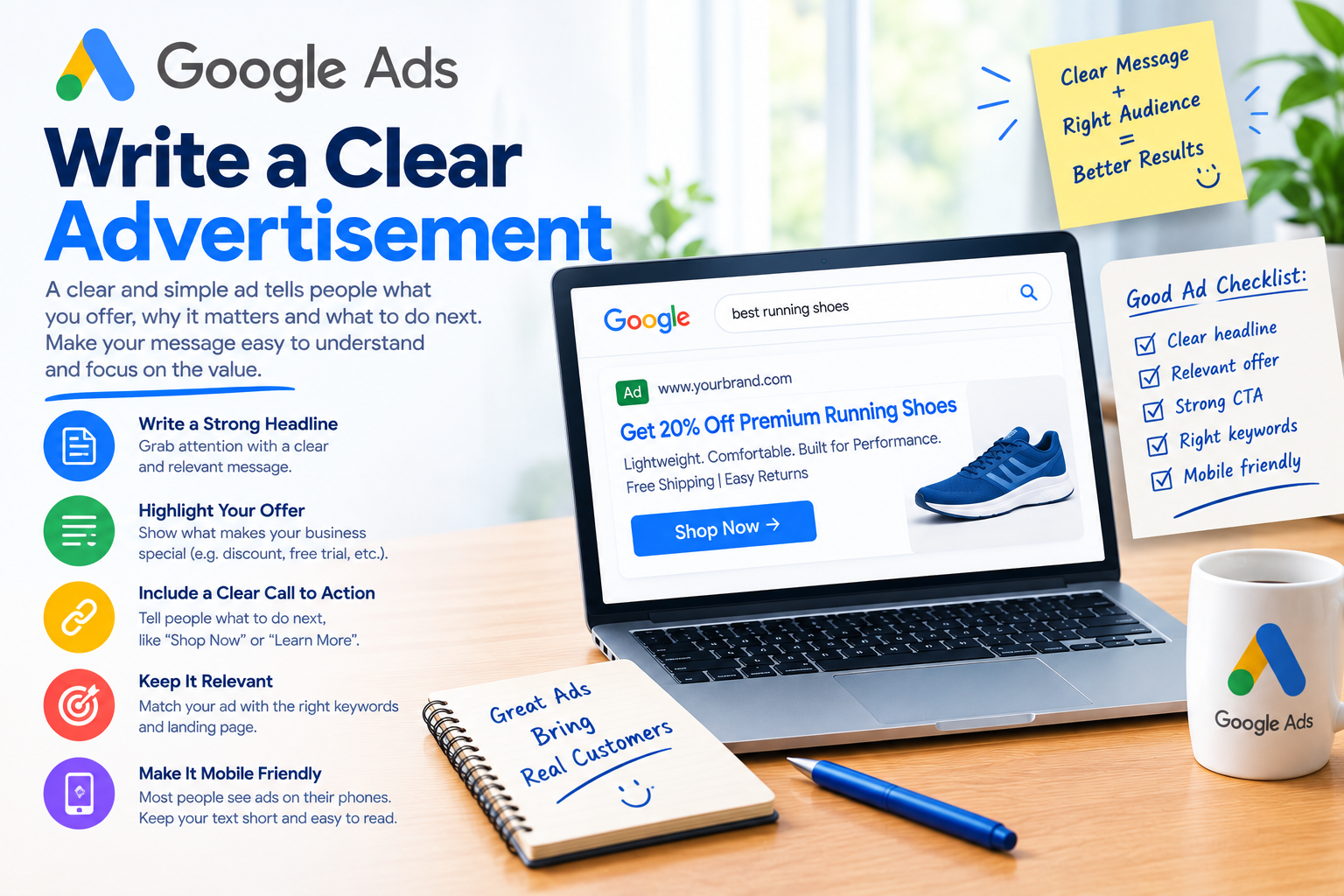
Your advertisement should quickly explain what your business offers and why someone should consider it.
A good ad can include:
- Your main service
- A clear benefit
- A relevant keyword
- A call to action
For example:
Professional Website Design
Create a modern website for your business. Get a free consultation today.
Keep your message simple and focused on the customer’s needs.
Step 5: Create a Relevant Landing Page
Getting someone to click your advertisement is only the beginning.
The page they visit should match the message in your advertisement. If your ad promotes website design services, the landing page should provide information about your website design service rather than sending visitors to an unrelated page.
A useful landing page should have:
- Clear information
- Easy navigation
- Strong headlines
- Contact details
- A visible call-to-action
- Mobile-friendly design
A good landing page can help turn advertising traffic into genuine enquiries or customers.
Step 6: Set a Suitable Budget
Start with a budget that your business can comfortably manage.
Don’t increase your budget simply because you want more clicks. First understand whether those clicks are producing useful results.
Monitor important metrics such as:
- Clicks
- Impressions
- Click-through rate
- Cost per click
- Conversions
- Cost per conversion
These numbers can help you understand where your advertising money is going.
Step 7: Track Your Results
Tracking is one of the most important parts of Google Ads.
You need to know what happens after someone clicks your advertisement.
For example, if 100 people visit your website but only one person contacts your business, simply increasing the number of clicks may not solve the problem.
Instead, you may need to improve your advertisement, targeting, landing page, or offer.
Step 8: Test and Improve Your Campaign
A Google Ads campaign should not be treated as something you create once and forget.
Test different:
- Headlines
- Descriptions
- Keywords
- Landing pages
- Calls to action
- Audience settings
Then compare the results and make improvements over time.
Small changes can sometimes make a meaningful difference to campaign performance.
How to Promote Your Business with Google Ads
Common Google Ads Mistakes to Avoid
Businesses can waste their advertising budget when campaigns are not properly planned.
Here are some common mistakes to avoid.
Targeting Too Broadly
If your advertisements are shown to people who are unlikely to become customers, your budget can disappear quickly.
Try to keep your targeting relevant to your actual products and services.
Using Irrelevant Keywords
Not every keyword related to your industry will be useful. Focus on searches that have a clear connection to what you sell.
Ignoring Negative Keywords
Negative keywords can help prevent your advertisements from appearing for searches that are not relevant to your business.
Sending Everyone to the Homepage
Your homepage may not be the best destination for every advertisement. When possible, send users to a page that directly matches the product or service mentioned in the ad.
Not Measuring Conversions
Clicks and impressions are useful, but they don’t always tell you whether your campaign is helping your business.
Conversion tracking can provide a better understanding of whether advertising is generating meaningful actions.
How Small Businesses Can Use Google Ads
Google Ads can be useful for businesses of different sizes.
A local business could target customers within a specific service area. For example, a photography studio could advertise to people searching for photography services in its city.
An online store could promote specific products to people searching for those products.
A service-based business could use advertising to generate phone calls, enquiries, or appointment requests.
The strategy should be based on the business goal rather than simply trying to get as many clicks as possible.
How to Promote Your Business with Google Ads